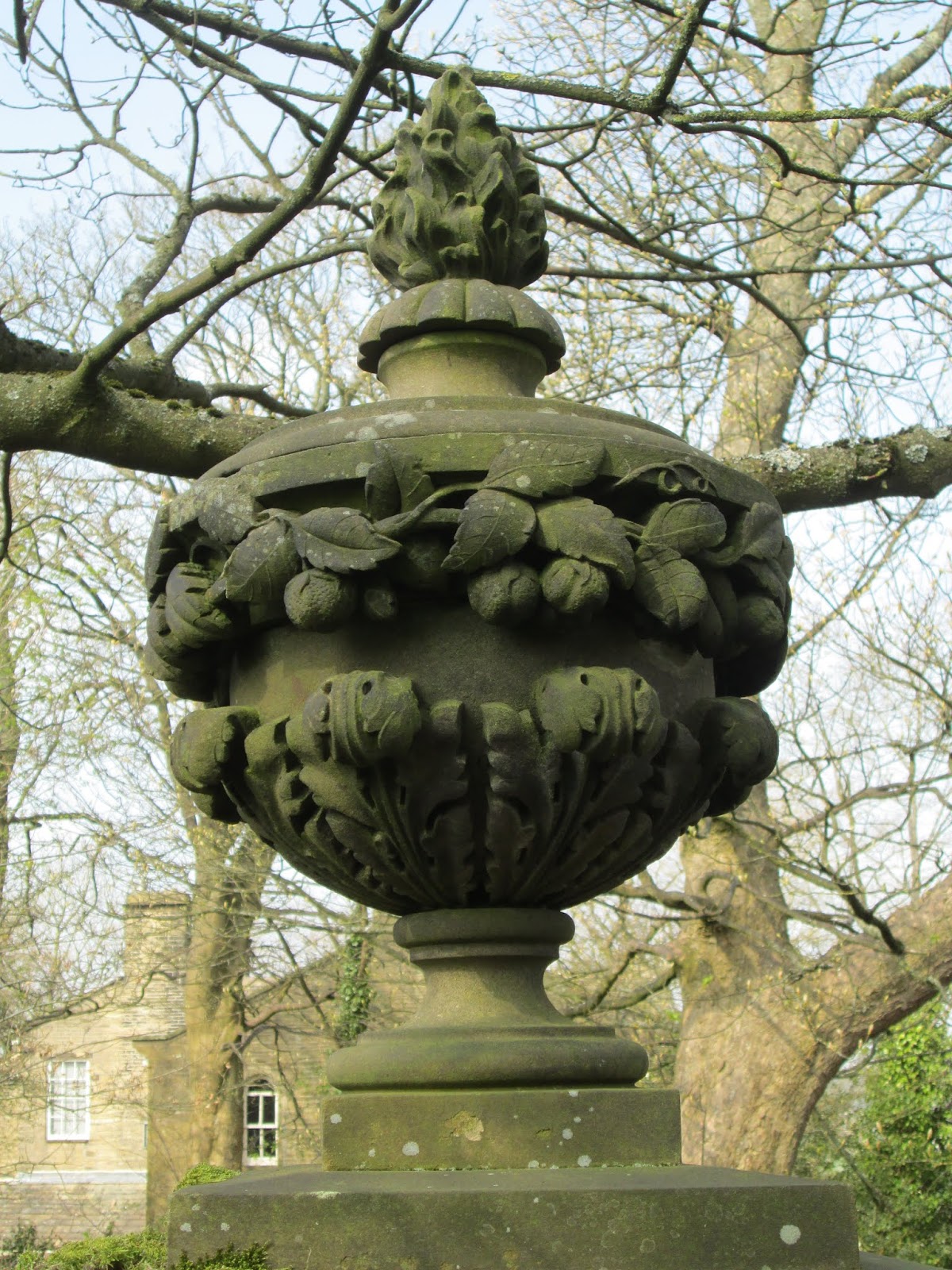
Friday, 26 April 2019
Sunday, 21 April 2019
Joanna at the empty tomb
Only in Luke’s
Gospel do we come across Joanna, and he mentions her twice.
Is this
because, when he was preparing his ‘orderly account of the events that have
been fulfilled among us’, she was one of the ‘eye witnesses and servants off
the word’ whose story had been ‘handed on’ to him (1.1,2)?
She is there
with Mary Magdalene, Susanna ‘and many others’ at 8.2: ‘some women who [Jesus]
had cured of evil spirits and infirmities... who provided for [Jesus and the
twelve] out of their resources’; a group the nature of which we would not have
had any idea were it not for this verse.
She is ‘the
wife of Herod’s steward Chuza’, which makes her a plausible source for the
inside information about Herod’s involvement with and attitude to Jesus trial
(23.8-11), something which Luke alone records.
She seems likely
to be among ‘all [Jesus] acquaintances including the women who had followed him
from Galilee [who] stood at a distance, watching these things’ at the crucifixion
(23.49) and who ‘saw the tomb and how his body was laid’ (23.54), in which
case, in a position to provide further first hand details.
And she is definitely
there again in this morning’s Easter Gospel, at the empty tomb with Mary Magdalene,
Mary the mother of James and other women, who ‘told all this to the eleven and
to all the rest’ - which those they told 'took for an idle tale' (24.9-11).
So, I spoke
this morning about feeling in touching distance of these first reports, and of
what seems the importance of these first reports having come from those who had
been mentally and physically damaged in the past, those whose witness also seemed so easy to dismiss or overlook.
They already knew, of course, that encounter with Jesus could be
transformative.
And,
although I didn’t explore this, perhaps Luke learns of Joanna and of Herod’s
court from Manean, one ‘brought up with Herod’, part of the earliest church at
Antioch, and one of those who commissions Barnabas and Saul for ministry (Acts
13.1-3), a ministry in which Luke appears to have shared.
Meanwhile,
the photographs show decorations ready at St James’ and at home first thing
today.
Thursday, 18 April 2019
Go on loving
When a dictator strikes, he is quick and efficient. A troublesome journalist steps inside his
country’s embassy and finds it is already equipped with bone saws to dispose of
his body. The nun quietly opposing
logging companies and championing the rain forest and those who live in it is
found with a bullet in her head. The
political exile touches a nerve agent smeared on the door handle of his safe house. And others in the media, in the church and in
political dissent get the message.
So the story for today (Maundy Thursday).
It is the sensitive time of year when the mob
in any big city could easily be whipped up against the occupying forces. A religious radical from the north has needed
watching for some time. Now he is in the
capital attracting attention and crowds.
There is intelligence about where he will be late in the evening. He will be picked up during the night. An initial trial will take place in the
dark. The authorities will rubber stamp
the conviction at dawn. The public
execution will be under way tomorrow (Good Friday) before most of the crowds
even know he had been taken.
Next week, there will be Easter Day to write about. The finality of death unfinalised. The tyrant’s effective swift victory
nullified. The religious radical loose
again.
But that news isn’t here in time for this week’s paper. We are still in the days when God-made-human
is alongside those whose hope seems least secure. He awaits the fate of those whose lives and
ideas seem so easy for power to stamp out.
As he washes their feet tonight, he has puzzling final words with his
fearful closest friends and collaborators – ‘go on loving whatever happens’.
Then power strikes and thinks it has won.
The picture is of Brookhouse Beck only a few hundred yards from our house, near the Railway Children tunnel. The three hundred words are my piece for the Thought for the Week column in today's Keighley News (I only get asked about once a year).
Monday, 15 April 2019
War Horses and mirror writing
Time in Haworth churchyard today with those developing a
simple guide for the Bronte Society. The
Bronte Parsonage Museum is in the back of this first picture.
We found the new Commonwealth War Graves Commission (CWGC) sign
in freshly in place. The intention to install
a sign alerting visitors to the presence of war graves was one of the
motivations for developing the guide. Both
war graves are marked by family headstones and we feared people setting off on
a fruitless search for distinctive CWGC headstones.
We found the tree which obscured the inscription on Frederick
Carr’s grave had helpfully been cut down, we hope by Bradford Council which
maintains the churchyard. Carr joined
the Army Veterinary Corps in 1897 and served first on the North West Frontier
of India and then in South Africa during the Boer War (being seriously wounded). The rate of the loss of horses became a
scandal and he became involved in seeking to tackle this problem travelling widely
with what was called the Remount Commission.
He saw service in northern Nigeria and in Egypt before going to France
at the outbreak of the First World War (where he was again wounded). Back in Egypt, he was seeking to tackle a
cattle plague epidemic when bitten by an infected mule. He was brought home to England and died in hospital
in 1917. He had been mentioned in despatches,
awarded the Order of the Nile and an insignia in the Ottoman Order of the
Osmanich.
We also pulled back the matted earth on one grave to find
that roots had followed the lines of the inscription beneath and now represented
a mirror image of it.
Friday, 5 April 2019
Autism Awareness Week
We got to
the launch of Saima Kaur’s Autism: This
is me at Kala Sangam (the intercultural arts hub in St Peter’s house next
door to Bradford Cathedral) last night: beautiful, imaginative, important and
moving.
She has used
the phulkari shawl embroidery tradition from the Punjab – pieces of which have
been handed down to her from her mother and grandmother – a tradition she knows
she will not be able to pass down to her profoundly autistic daughter.
Her shawls represent
interaction with stages of her daughter’s life.
Her hopes in the gift of a child about to be drawn down to her. Herself in a spin amidst the things people
said to her when her baby’s development seemed at first to be delayed. The sounds her growing daughter made. The way her daughter is overwhelmed by
senses. Experiences of anger. Fears for the grown daughter she will one day
leave behind.
And she
spoke of the what a difference it had made to her to express all this, and how she
had been able to draw some other mothers with children at the same Special
School into expressing other aspects of their own, a few of which were also on
display.
It continues
during the Centre’s normal opening times until 23rd May.
Friday, 29 March 2019
Crow Hill Bog Burst
On 2nd
September 1824, Patrick Brontë was in the Parsonage when he “heard a deep distant explosion” and “perceived a gentle tremor in the chamber”
which was “the busting of a bog or
quagmire” with “all the precursors,
accompaniments and results of an earthquake” five miles way on the
moors. He saw it as an act of God.
“A rapid torrent of mud and water issued
forth, varying from twenty to thirty yards in width and four to five in depth;
which, in its course for six or seven miles, entirely threw down or made breaches
in several stone and wooden bridges – uprooted trees – laid prostrate walls –
and gave many other awful proofs, that, in the hand of Ominpotence, it was an
irresistible instrument to execute his justice.”
“Sometimes, God produces earthquakes as awful
monitors to turn sinners from the error of their ways, and as solemn forerunners
of that last and greatest day, when... the universal frame of nature shall
tremble, and break and dissolve.”
“Here and there... I was able to discern one
in deep contemplative mood, who saw by faith through nature to nature’s
God... Many, I perceived, on their return
home, who in all the giddy frivolity of thoughtless youth, talked and acted as
if they dreamed not of heaven or hell, death or judgement.”
“The greater part continue to indulge in
their bad passions and practices, utterly regardless of every warning, and not
considering the awful reckoning they will be brought to for these things on the
last day. Let us pray earnestly for divine
grace, that we may be able to act differently, and to walk by faith in Christ
Jesus.”
This is a
text (from one of only two published sermons of Patrick Brontë’s – he mainly preached
extempore) to which I’m returning quite often at the moment, preaching last Sunday, revising the Brontë related leaflets we leave in the prayer corner in St Michael’s, Haworth, and developing ideas for the Brontë Society's annual weekend in the summer.
Meanwhile,
the picture is from the German Church in Bradford; the art work is simply
mounted on cardboard and I wonder whether we could create something like a temporary
major hanging cross for one of our churches.
Monday, 18 March 2019
Confessing possibilities
This week, I
found myself in the German church in Bradford for the first time, and thus in
the steps of Dietrich Bonheoffer.
The area in
which the church is set is called Little Germany. From the 1850s Germans came in good numbers to work in the wool industry, and the building is
now called the Delius Centre in honour of one of the most prominent of those
families which included the famous composer who was himself born in Bradford in the 1860s and brought up there.
Bonheoffer
was working as a German pastor in London in 1933 when Hitler came to power and began
to suborn the national Lutheran churches to the Nazi cause. It was at a gathering in Bradford that a
resistance statement was agreed by the German pastors in England at Bonheoffer’s
instigation.
It was of no use. The national church capitulated and became a tool of Jewish exclusion and persecution. Bonheoffer was to return home in 1939, be a prime mover in a dissident alternative ‘confessing’ church, ran its underground seminary for new pastors, and, in 1945, be taken to a concentration camp and executed.
I wondered
about W. Hansen, listed as Pastor 1930-39 and then 1948-52. He must have been the host of the gathering
on 1933. And, like the J. Collier listed
on the incumbents’ board in Haworth as being ejected at the Commonwealth and
then reinstated at the Restoration, it is the gap in his ministry dates which
is particularly striking.
We were
there to hear a remarkable women who we had in fact met in 2013 in the West Bank and who was in England promoting the work of the Fair Trade Co-operative
Women in Hebron which seeks to provide employment through the sale of handmade
Palestinian crafts. Her quiet
determination to continue in the face of almost unimaginable consequences of
occupation felt as moving as the setting.
In 1994, there
was a gun massacre in the mosque in central Hebron near where Women in Hebron’s
shop now is – just as there was in Christchurch the day before she spoke to us. Awareness of the attack on a synagogue in
Pittsburgh less than a year earlier, on Finsbury Park Mosque less than a year
before that, and attacks on a number of Christian churches across northern
Nigeria across the whole period, makes us cry out for more Bonheoffers and more
Women in Hebron.
Subscribe to:
Posts (Atom)