Wednesday, 17 June 2020

Warm blossom time


For in the Romans there is an arrogance which no submission or good behaviour can escape.  Pillagers of the world, they have exhausted the land by their indisciminate plunder, and now they ransack the sea.  A rich enemy excites their cupidity; a poor one, their lust for power.  They are the only people on earth to whose covertness both riches and poverty are equally tempting.  To robbery, butchery and rape, they give the lying name of ‘government’; they create a desolation and call it peace.

I’ve been returning to a famous quotation in Tacitus’ life of his father-in-law Agricola.  We can make obvious inferences about Roman power from the little which is known about Pilate as Governor of Judea at the time of Christ, but it is all spelt out in the detailed account of Agricola as Governor of Britain forty years later.  And Tacitus imagines (rather than reports, I assume) how a particular British leader would have excoriated his conquerors and what was just being coined as Pax Romana.

Three things strike me re-reading this quotation in the time of Black Lives Matter.

The first is that a campaigner today chanting ‘No Justice, No Peace’ is saying roughly the same as ‘they create a desolation and call it peace’: it is not peace if there is no justice; it is not peace if all opposition has simply been crushed or swept aside.  Tactitus gives us the earliest account of what a native inhabitant of these islands would have thought, so the whole history of reflection in Britain is bookended by cries that the absence of conflict is not in itself real peace.

The second is that, quite unexpectedly now I notice it, Tacitus, a member of the Roman elite, exhibits a remarkable level of empathy and self awareness in giving this account.  Put in our terms, his privilege has not blinded him to the way that privilege crushes those who do not share it.

The third is how almost integral self-interest is to having absolute power (to being ‘top nation’).  One could almost plot onto this quotation things like our own past subjugation of Ireland, slave trading, and making war to enforce drug use on China; our exploitations which we lying told ourselves was good government.  One could almost plot onto it our immediate future’s helplessness to preserve any control of security of the internet, to retain our established levels of environmental and animal welfare, and to prioritise adapting to forestall the climate emergency; our capitulation to the desolating conditions on which we will be allowed to trade peacefully with those now powerful in our place.

I wove the first two of these three striking things into a sermon on Sunday, adding there a third which was the positive possibilities of what looks almost like the first experiment in what being sent out by Jesus should mean (Matthew 10.5-14): don’t rely on having resources to deploy; name and intend peace at every stage; announce God’s alternative way and approach as being within reach; act it out in reconciliation, in bringing new life, in casting out the destructive; don’t be downhearted by the failure of this robust just peace to take root, but dust yourselves down and try planting it again nearby.   

I’ll have to wonder why I sketched out a different third point for this blog post.  It may simply be that I’ve been trying to juggle with some over simplified historical perspective.  

Just as the Hundred Years War of the Fourteenth and Fifteenth Centuries was not a continuous conflict but rather a regular flaring up of a single theatre of conflict over more than a century, I wonder whether history will see the conflicts roughly beginning with German unification (1871) and ending with German reunification (1990) as a single ‘Hundred Year’s War’.  

Did Britain, whose Empire had been at its zenith in 1870s, find itself in the 1970s, in the last stages of that war, settle down to a new normal with both the disposal of the final remnants of that Empire and with taking a new part in the close economic and political alliance created by the main protagonists of that single continental conflict in which it had been caught up for those hundred years?  

And, does it now find itself a generation or more later, stepping out (without either Empire or close continental alliance) almost innocent of what being subject to the powerful self-interested misrepresenters of what political peace and freedom will mean?

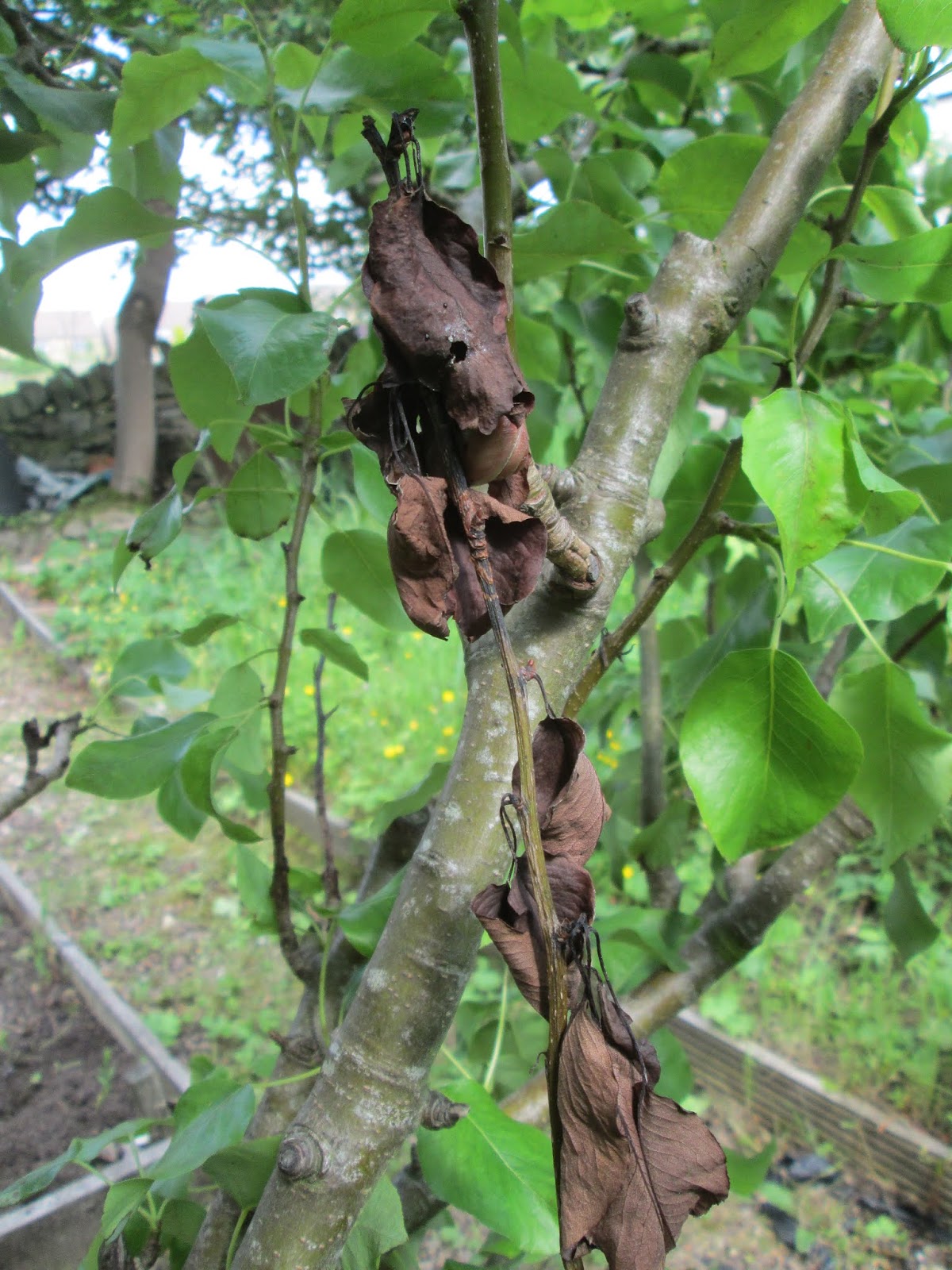
Meanwhile, the picture is of newly discovered fireblight in our small orchard of fruit trees, widespread and incurable, so the trees will probably need to be taken out, and with much care.  Apparently fireblight doesn’t usually taken hold this far north because it requires sustained warm weather at blossom time, so our wonderful May was not quite the blessing it seemed.

Monday, 1 June 2020

Breath of God


The most arresting and transforming image from worship yesterday was the London church which pictured the crucifixion with the caption ‘I can’t breathe’.

It didn’t need spelling out. 

We’ve been taught that it is suffocation which ends the life of those being crucified; pain and exhaustion means tortured victims can no longer hold themselves in a position on the cross in which it is possible to breathe. 

We’d seen footage in the week of a black community activist’s death as he was arrested; his being knelt upon until the life was squeezed out of him; his final ‘I can’t breathe’ being taken up as the cry of riotous reaction. 

We instinctively make the link: lawful controlling authority’s tendency over the millennia to be almost casual in eliminating those it sees as possible sources of insurrection in the majority community around it; now here yet again as God’s story and our world’s story side-by-side.   

And we know that Covid19's deadly work is when it overwhelms lungs so that even invasive ventilation fails to deliver enough oxygen.

An image of the crucifixion with the caption ‘I can’t breathe’ startles because the crucifixion uncaptioned is such a familiar sight that normally it fails to provoke any real reaction in us at all.

And it is an image which unsettled yesterday because it wrong footed some of the standard worship at Pentecost; pious generalisation trotted out with a broad smile (about the breath of God – and about peace, joy, and forgiveness) can seem glib or superficial if simply spread about as if the Holy Spirit is like a pixie dust which will make everything alright.

We would have been reading of locked-down fear in John’s account of Easter Day:

When it was evening on that day, the first day of the week, and the doors of the house where the disciples had met were locked for fear of the Jews, Jesus came and stood among them and said, ‘Peace be with you.’  After he said this, he showed them his hands and his side.  Then the disciples rejoiced when they saw the Lord.  Jesus said to them again, ‘Peace be with you.  As the Father has sent me, so I send you.’  When he had said this, he breathed on them and said to them, ‘Receive the Holy Spirit.  If you forgive the sins of any, they are forgiven them; if you retain the sins of any, they are retained.’

Perhaps we are being freshly invited this year to pray - tentatively, painfully and realistically - that the gift of the Holy Spirit will do the hard work of properly arresting us and transforming us.  And those with forceful authority around us.  And those most vulnerable to having life squeezed out of them, even alongside their last gasps.    

We do so with a strange recognition that, at the centre of the reading, the newly risen Lord who is suddenly there speaking peace (and who is about to send them, breathe on them, and warn them that there are implications in their reactions to other people’s sin) appears to be recognised and authenticated precisely by his showing them the wounds of his killing. 

May be the whole movement of the passage suggests something strange but essential about the places where our fear will turn into joy.  It is the one who has had not been able to breathe who breathes Spirit on us.  It is the scarred one who sends us to discern where human sin still deeply scars ourselves and others. 

Resurrection possibilities can only ever be squeezed out of lifelessness.  The teachings have always been that it is from apparently dead seeds, often those sown in tears, that joy and peace and forgiveness have a chance of beginning to grow.   

Sunday, 10 May 2020

Ferns and prayers


In our desiccations, with those dried up,
we pray:
ever-creative God,
un-curl us. 

In our isolations, with those restricted,
we pray:
human-habited God,
fresh-green us.

In our mortifications, with those disprited,
we pray:
re-newing God,
new-season us.

Wednesday, 29 April 2020

Rooks and bees


A fresh nest on the statue of St Michael, high on the east front of St Michael's, Haworth, and the nest-building debris below it.


Our favourite bush at the Rector entrance, with the flowers which face the sun coming into bloom first, and one of its early visitors.

Friday, 17 April 2020

The Church of England might look different


Almost exactly thirteen years ago, I attempted to help the Deanery (or ‘Mission Area’ as it was briefly fashionable to call it at the time) of which I was Rural Dean to recognise the level of change which we faced, and I was sufficiently impressed with myself both a year later to reproduce much of it as the second post I put up on this Blog and now to want to return to it again.

The physical landscape around us changes gradually until it becomes unrecognisable.  Some change we hardly notice, such as the slow erosion caused by a river.  Some change is observable over a few years, such as the retreat of a cliff.  Some change is instant, such as the result of a levies breaking or land slipping.

In the past, change in the Church of England has been of the first sort.  In the 150 years before I was confirmed in 1974 the pattern of clergy deployment, relating to society, theology and worship... changed fundamentally without any of the individual increments being revolutionary.

In the present, change in the Church of England is of the second sort.  The Alterative Service Book 1980 came and went in just twenty years, and the number of clergy deployed...  [here] today is half the number in the Pastoral Plan of the early 1990s.

What is hardly grasped by anyone involved is that change in the Church of England immediate future will be of the third sort.  The ground beneath us is moving.  The pressures created by the demography of our congregations and the tightening our finances (as well as shifts in society) have been building inexorably.

The demography of our congregations is such that the presence of those who were formed as present and future members of the Church of England in the 1920s, 30s, 40s and 50s has masked the startlingly smaller number so formed in the 1960s, 70s, 80s and 90s, but as they begin to die the huge gap is exposed.

The tightening of our finances has reached the point when we need to subscribe... over £100 a day to deploy a stipendiary clergyperson, before we even begin to finance our church activities and buildings; this will continue to increase in real terms....

... on a specific day in the not too distant future the combination of these pressures will mean that we suddenly cease to be able to operate as we are.

Some people of all ages will continue to make Christian commitment, and many people will continue to look to the established church for varieties of Christian ministry, but the numbers of those committed will not be able to sustain anything like our present provision of buildings or stipendiary ministry.

Some small parts of the Mission Area continue to operate as if change is still very gradual...  [so] change doesn’t have to be faced at the moment at all.

But the majority of the Mission Area operates as if rapid change is enough; ... places where ten years ago a priest lived next door a church which was his or her sole responsibility have all ceased to operate in this way; systematic development of authorised lay ministry and alternative worship is common.

Hardly anyone operates as if the major crisis is coming, and the ugly experiences of our Methodist neighbours when seeking to bring together three small churches in the centre of our Mission Area is one indication of why we have shied away from seeking to propose anything bold...

... we know (as the Methodists do) that the personal investment of most of us in the particular congregation of which we are part means that coming to a common mind about which places to identify and then willingly ceasing regular worship in the others is a task which may well be beyond us.

So are we more likely to wait until the levies break or the land slips, until further specific congregations become unviable or until the provision of stipendiary ministry across particular parts of the Mission Area becomes impossible, and make emergency plans in the new landscape only when we can see it?

Since then a complementary evolutionary (rather than geological) image has come to mind, remembering that the mechanism of evolution often appears to have been sudden steps rather than imperceptible increments.

A disaster (of climate or flood or famine), perhaps even a near extinction event, happens.  In happening it creates a pinch point such that only a fraction of a species survives, and new born members of this species will descend from those survivors alone.  Whether it was the unusual length of a foraging snout or the accidental camouflage provided by a minority fur colour or some other suddenly advantageous dexterity or stamina, those without it will have no children.

So, it is not a surprise to find that the sudden closing down of much of our economy put straight out of business some firms which were already precarious, and now threatens to do so for a significant proportion of other previously flourishing small and medium sized businesses as well.

And it is not surprising that serious worries arise about the viability of the business models on which our dioceses and parishes are operating.  Is this the breaking of levies, the slipping of land, the near extinction event, the evolutionary pinch point?  If it is, what will the landscape look like when we set out of isolation?

On Wednesday, the latest in the Bishop of Leeds’ e-mails to his clergy named this fear.

Some of you will be wondering what will happen when we re-enter and re-launch in due course.  I am also aware that there is some fear about the sustainability of the church in the light of an economic depression/recession, loss of finance to parishes and a plunging stock market.  I just want to reassure you that discussions are going on nationally and in the diocese about how to anticipate, mitigate or negotiate the challenges that might confront us.  I am not worried about this at all.  We are a people who deal with reality and work out how to respond faithfully to any challenges that come our way.  We are getting ahead of the game in this, but we don’t have firm data with which to work yet.  I simply want to reassure you that the thinking and scenario planning is being done at every level.  What is clear is that the Church of England might look different in the future – even if our core vocation does not change.

I am grateful for his positive tone.  I just wonder what ‘might look different in the future’, now so clearly named, will actually mean.

Before the sudden crisis, there was already great popularity and significant strategic funding being directed to establish franchises of (and imaginative variations on) the Holy Trinity, Brompton approach to mission and church life.  Perhaps this was already anticipated to be one well adapted potential survivor of and parent of Church of England life.

But has there been real evidence that this or any other model was already particularly well adapted for often ancient parishes churches at the centre of villages of 500, 2000 or 3500 people at present lay-led and largely attended by those in their 70s and 80s whose economic viability has looked vulnerable for some time and might now be suddenly tipped over?

And are those stipendiary clergy most like me (as some of the last 1000 blog posts has sometimes identified and admitted) ill-adapted parts of the present logistical and theological vulnerability? 

Meanwhile, the picture is the Easter garden created in front of the house here.

Saturday, 11 April 2020

Waiting in darkness


Parts of the reflections for Thursday and for Saturday from the Bronte Virtual Church blog.


There was a full moon late on Tuesday evening.

This is not a coincidence.  There is always a Full Moon on one of the days before Easter. 

We know that the resurrection happened very early on the first day of the week around the feast of Passover.  And we know how the date of Passover was calculated.  So the early Christians came to celebrate the resurrection on the first Sunday after the first Full Moon after the Spring Equinox.

This year’s Spring Equinox was on 20 March.  We had to wait eighteen days until Tuesday’s Full Moon.  We are now waiting five more days for the next Sunday so we can celebrate Easter on its actual anniversary.

Those without modern calendars, and without our convention that the year begins on 1 January, would have thought of it as the first day of the first new week in the first new month (a word which relates to moons) of the fresh new year.

But it places us in a moon-haunted darkness for a few days first.  Jesus is arrested tonight (the Thursday before Easter, Maundy Thursday).  He is executed tomorrow (the Friday before Easter, Good Friday).  And all creation appears abandoned by his absence the following day (Easter Eve, Holy Saturday).


Nothing happens on Holy Saturday
 
Good Friday’s grief and drama were yesterday.  Easter Day’s surprise and celebration will be tomorrow. 

The church has an extraordinary wealth of prayers and activities for yesterday and for tomorrow, because the death and resurrection of the Lord is the pivot on which everything turns for us. 

But it doesn’t for today, because nothing happens today.

Many churches use the empty day to spring clean and to deck the church out ready for tomorrow. 

But this year the church can’t distract itself by being busy like that.  We simply have to sit and wait. 

Perhaps that has always been the point.  We sit, we wait, and we long for God’s promise to become real around us.

There will be a tiny shock of recognition for those doing so who turn the pages of our daily service book to find a prayer composed for today and used for several years. 

It is difficult to think it wasn’t written in the last few days for our situation: 

In the depths of our isolation
we cry to you, Lord God:
give light to our darkness
and bring us out of the prison of our despair.

So, this year, let us not rush on too quickly to trumpet the resurrection which we always know is very close. 

Let us wait alongside those for whom it is not yet close.   

With those in isolation around us,
with those who cry,
with those who cry to you, Lord God:

we pray for the light you promise
not seen by those now enveloped by darkness;

we pray for the hope you promise
no whiff of which reaches those now enmeshed in despair;

we pray for the freedom you promise
no rumour of which is heard by those now most confined;

we pray for love you promise
    not savoured by those now misused;

we pray for resurrection you promise
    not touched by those now held in doubt.

For many it has always been true that the leap from grief to joy has not been instantaneous.  As nothing happens today, we wait and pray alongside them. 

For ourselves, there are also things for which we long (an interesting word in itself). 

If this is the right sort of praying to do today, it is beautiful that the Archbishops’ recent message speaks of us all at the moment “living through a prolonged Holy Saturday”.

We will not see an end to the present crisis any time soon.  But we will do so.

We will not be able properly to celebrate Easter for a little while yet.  But it will come.