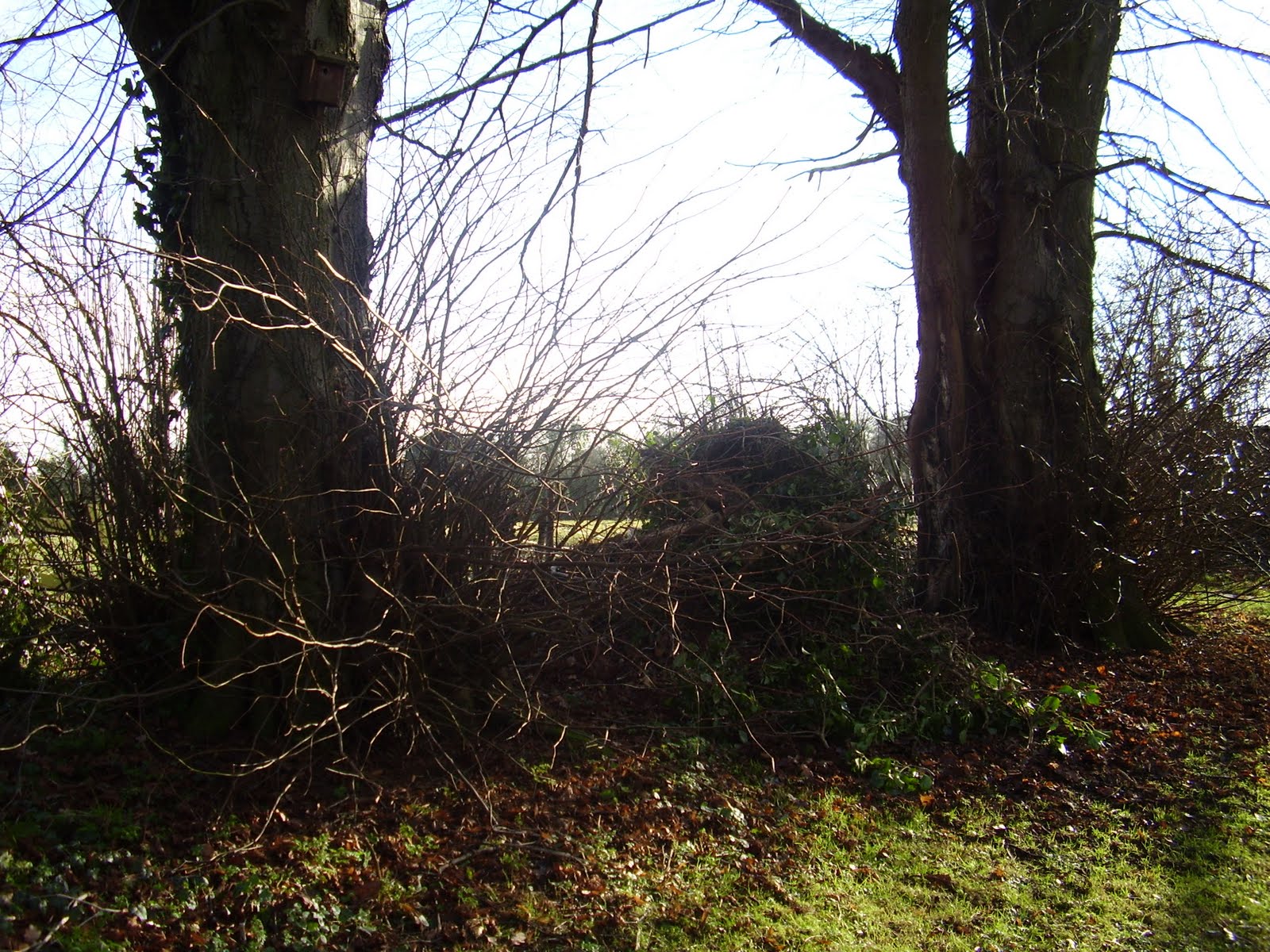
Showing posts with label St George's. Show all posts

Monday, 5 August 2013

Another break-in?


A temporary repair to the south window in the chancel at St George's, Bradley where it appears a burglar removed both the mesh and a whole window panel to gain entry; this would be third occasion in my time here that a window has been damaged in this church in this way, and, when the facts and details are established, it is possible that once again the cost of the repair will be far higher than any costs involved in losses from the apparent break in itself.  Meanwhile, some of the the villagers have contributed during July for the first time to a church-based collection of tinned food for the Daily Bread Community Larder in Grimsby, so, as it happens, the church had been doing its part in seeking to support those in greatest need locally at the same time.


We spotted this thatcher at work in Ashby St Ledgers in Northants when visiting my mother, and observed the way the visible thatch is all made up put of the ends of stalks.  Meanwhile, today's Independent highlights nationally what I had been about to post from the local experience of the new 'bedroom tax'.  The number of householders who have had benefits reduced because of having a 'spare' bedroom in the two Wards of this parish alone far exceeds the number of one and two bedroomed properties in the whole of North East Lincolnshire available for such people to move into and thus make their larger homes available for others and reduce their own rent.  What is troubling is that the property-owning (perhaps even thatched property-owning in some cases) politicians responsible for this situation knew this before they embarked on all this.  Nobody will be surprised if things like the use of food banks and the frequency of church break-ins increases as more and more families are pushed into debt.

Tuesday, 11 September 2012

Heritage Open Days


This is a capital from the top of a column in Louth Park Abbey now upside down and used as the base of a garden ornament at near by Brackenborough Hall.  It is just one of a number of interesting things we were shown there on Sunday afternoon.


And this is me gesticulating at St George's, Bradley the previous day.  We provided guided tours of each of our three mediaeval churches on Saturday and most of the photographs seem to show me waving my hands around...


... including this one introducing people to the Tickler Memorial Window inside the church.  I had prepared a post yesterday about the announcement of the unexpected early retirement of our Area Bishop (including some quotations from useful things he has written in the past) but I can't get Blogger to accept any 'paste' commands so that will have to wait.

Monday, 9 July 2012

Building worries


It may be the tower of St Nicolas’ which is moving (or, more specifically, slowly sinking towards the south) rather than the south aisle which is moving away from the body of the church. That is the slightly disturbing conclusion of the measurements taken today based on the fixed points established not quite five months ago, although nobody is suggesting that the massive and majestic tower is about to topple over.

Today’s measurements actually show that the crack between the aisle and the tower has closed a bit, which wasn’t what we had expected at all. It is not this measurement but instead a simple horizontal pencil line drawn across the crack five months ago which shows where there has been vertical movement; the picture shows this looking at the west wall, with the aisle on the left and the tower on the right of the crack.

Given that a Churchwarden at St George’s rang this morning to say that some lead flashings have been taken from the building there, it hasn’t been an encouraging day regarding the stewardship of our buildings.

Monday, 27 February 2012

Village websites


Bradley village has a new website established by the Parish Council. It is at http://www.bradleyvillage.co.uk/ and quite apart from anything else, opens with a beautiful photo of St George’s. It has put up historic information based mainly on the material I put together for it and posted here a short while ago. It has also put up some news from the church for February for which I am grateful. It did put up information about activities at Bradley pitches on the edge of the village, but has now taken this down again, I guess because members of the Parish Council are very unhappy about the way this facility has been allowed to develop and be used and therefore don’t want to give it publicity. I’ve tried at various times to encourage those in the village who take different sides in this dispute to be generous in relating to those with whom they disagree so sharply, but I’m not sure such intervention has been welcome, and it is sad that this dispute has also led to different people leaving the Parish Council at different stages. Personally I shall also be sad if the new website doesn’t become home to open information about all activities in or on the edge of the village whether originating from church, Parish Council, pitches or anywhere else, but I will have to be sensitive with those who don’t agree with me about that.

There is another Parish Council at the other end of our ecclesiatical parish, and the Great Coates Village Council also has a well established website at http://www.greatcoatespc.com/ (through which information about St Nicolas’ can be accessed by clicking on the electronic version of the village newsletter). Sadly, exactly the same pattern of internal disputes, and excatly the same pattern of some members leaving the Village Council, is going on here; the issue is whether or not the Council should take a substantial loan to build a new Village Hall. I haven’t been able to engage here because I’d look like an interested party since the proposal does spike the guns a bit of our ambition to develop St Nicolas’ to meet some of the relevant needs. The opening page of the website has a link to the results of a formal Parish Poll in which 40% of the registered voters turned out to vote 87 to 377 against the proposal; there is what could be misunderstood as a disingenuous reference to the turn out at the last parliamentary election (63%) rather than local authority election (33% in the relevant Ward).

I took the photo this morning in Great Coates churchyard. The crosses mark the graves of Canon Quirk (further away) and Canon Barber (nearer) who between them were Rectors of Great Coates between 1892 and 1954. Quirk’s immediate predecessors were non-resident, and Barber’s immediate successors were also incumbents of Aylesby, so their sixty-two years was a brief high point in the ideal of committed long-term residence in a single small community. They were both highly respected and probably much better than me at judging how to help villagers relate to each other well, although last week I did visit a parishioner who is more than a hundred years old who recalled Mrs Quirk’s negative reaction to being refused a little girl’s curtsey at some point in the 1920s.

Thursday, 22 December 2011

History of Bradley


A little while ago, I did a sheet for St George's with a paragraph for every century for the last thousand years.  This week the Chair of the Parish Council asked whether I had anything similar for the village itself.  I didn't realsie how much I'd picked up over the last twelve years, but, with a little help from books on my shelves and the obvious places on the web, I was able to come up with the following initial draft.  I took the picture is the churchyard cross this morning.

Before 1000. We don’t know when the first settlement took place here, but the name (perhaps‘broad wood’ or ‘wide clearing’) dates from before the Vikings came and established or took over a port at ‘Grim’s by’.

1000s. In the Domesday Book, Laceby (apparently the Manor centre), Bradley and Scartho are listed together. Anglo-Saxon Swein, Erik and Tosti held most land, one of the Conqueror’s brother’s had taken some, and nearly a hundred others (‘villans, bordars and sokemen’) had tiny bits. The Manor had some interests in Grimsby, Clee and the Clee thorpes.

1100s. The name Bradley was used as the name of the meeting-place for a wider ‘wapentake’ (roughly a ‘weapon take’ - the administrative sub-division of the shire from which things like military service or tax could be required). It is just possible that the stump of a mediaeval cross in the grounds of the present Manor house is associated with this.

1200s. Ralph of Bradley was paid for materials for building the King’s castle in Grimsby, that he later killed a man in Grimsby, and that his son Geoffrey was at the siege of Lincoln. (References in the Gillett History of Grimsby.)

1300s. It is likley that the Black Death dramatically reduced the population of the parish, and there was evidence of an old village site in the fields south of the present Manor site.

1400s. The Borough of Grimsby owning the Manor of Bradley, on which Lord Wells had claims, and which the Wright family was to ‘wrest from them’. (References in the Gillett History of Grimsby.)

1500s. There is no real evidence for the well loved story that Henry VIII hunted boar in Bradley Woods when he stayed at Thornton Abbey in the 1540s. From the 1580s a James Wright was systematically buying up the Manor and lands (at that time divided into nine parts), some of it known as “Lord Well’s Manor”.

1600s. Hustwaite Wright buys a further two portion of the Manor in 1626. He sells the whole Manor to Richard Nelthorpe in 1633, and both are held criminally responsible for depopulating the village soon afterwards. The Nelthorpes (of Scawby) later acquire things like the woods and the patronage of the church, and the family owned the land for nearly three hundred years. The present Manor House is built in the 1680s (although it contains some features of an earlier house).

1700s. The land was formally ‘enclosed’ (parcelled together into fields suitable for modern agriculture) at the beginning of the eighteenth century, but only eleven families lived in the parish in the 1720s. (References in Ellis & Crowther’s Humber Perspectives.)

1800s. Modern census returns finally bring all the villagers to light. In 1851 there are nineteen houses (two uninhabited). Apart from five farmers (William Phillipson had most land, Samuel Gooseman lived at the Manor, and there was Robert Richardson and both a John Kirk and a Thomas Kirk) and a number of agricultural labourers, the only other ‘heads of household’ are the Rector (ecclesiastical reform had just led to the building of a new Rectory for a resident parson in 1849) and a Grocer.

1900s. In 1914 the Nelthorpes sold their 1 500 acre Bradley estate for £35 500; the Borough Grimsby bought what is now Bradley Playing Fields (at that time it wanted the land for a future cemetery) and Bradley Woods (for public use). First residential developments were at ‘Bradley Hollow’ (along Laceby Road) and this part of the parish (along with the whole of the parishes of Little Coates and Scartho) became part of the Borough of Grimsby in the 1920s. Most of the sixty or so houses in the remaining village have been built since then - even in the 1940s the arrow on the road pointing ‘to the village’ on a plan of the churchyard points south, and the suburban developments along Bradley Road and the first part of Church Lane are post-War.
Saturday, 19 February 2011

Approaching Lent


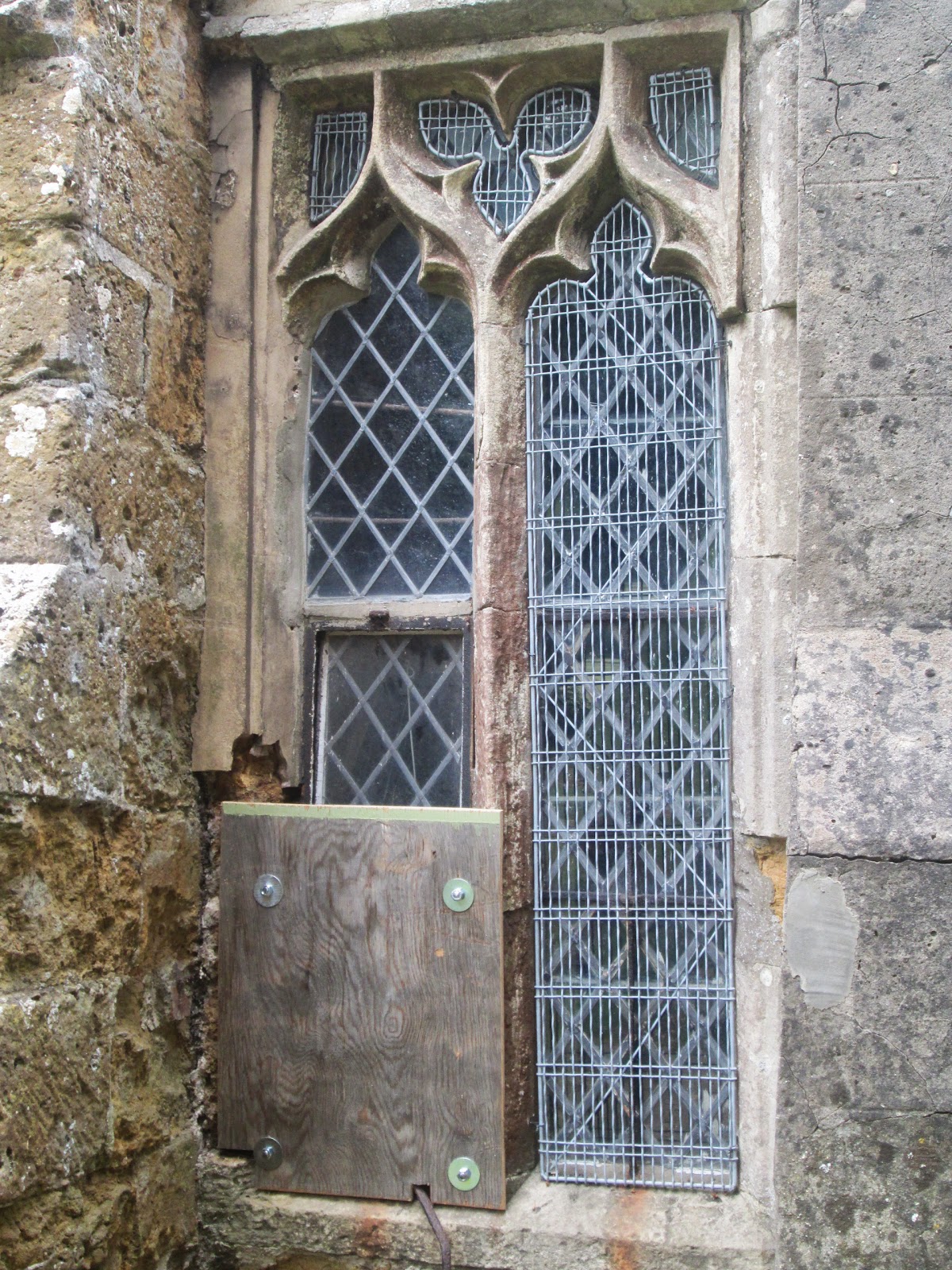
My ambitions to do something creative with the dead trees in Bradley churchyard are not progressing quite as smoothly as I'd hoped.

First, I posted the idea that the dead tress could be made into something new and thus be a parable of the Easter possibilities which surround all our failures. This bit the dust when the carver said the dead wood couldn't be carved.

Then, I posted the alternative idea (developed with the carver and some District Church Council members on his visit) that a pair of living trees might be carved to disclose an Easter Garden. This received provisional support from the Archdeacon, but not it turns out from some of the other members of the District Church Council who were not present when the idea was developed.

And now, even the very minor related act of moving the bonfire pile to a less prominent position has resulted in one of the dead trees catching fire and now looking even worse than it did before hand. (This is the tree in the centre of the picture posted on 16th January, but here seen from the opposite side.)

Heh, ho.

Thursday, 20 January 2011

Encountering Easter

The wood of the trees cut down because of disease is not sound enough for carving. It is quite an obvious conclusion now that the tree carver points it out to us. But carving features into living trees (a possibility which hadn’t occurred to us at all) could be on our agenda; only a small portion of the bark would be effected. We’ll need an early bit of consultation with the Archdeacon and someone from the relevant Diocesan Advisory Committee in case this idea bites the dust too. We looked at this site - on the far side of the churchyard as one enters but straight ahead; we’d need to shift the bonfire site from between the trees (which we ought to have got round to doing before anyway), and I favour something which doesn’t ‘shout’ but which emerges for those who approach with perhaps the figure of Mary Magdalen on the left and an angel at the entrance to the empty tomb on the right. Meanwhile, we’d need to take other advice about whether tidying up the stumps which eyesores can be done within the budget we have.

Sunday, 16 January 2011

Beyond scars

We think we might be able to turn this eyesore into a feature, and a craftsman who carves trees is coming to Bradley churchyard later this week to explore the possibility with us.

It is a some time ago that St George’s had to raise £5000 (most of the annual turnover of this village church - there was a generous response in the village) to make safe several horse chestnuts which had been attacked by bleeding canker. If we had had further money at the time we might well have gone on to remove the frankly ugly stumps which remain, but we didn’t.

This picture was taken in the summer (the bags in the centre relate to work which was being done refurbishing a grave) and only shows the most prominent of several stumps with which we have been left.

For a little while we’ve been canvassing the idea that the stumps might be carved, and that the results might become something people would want to come to see. I fancy a ‘calvary’ or an ‘empty tomb’ which could even be a focus of devotion for those who find the church itself locked. Another idea is to have at least a dragon or perhaps a St George as well. There is also a desire for a bench in the churchyard; the fear that such a bench might be stolen would certainly be eliminated if it was part of a tree trunk and thus literally rooted in the ground.

There are various hurdles we’d have to jump to pull off a project like this. Is the wood sound enough for such carving? Is the craftsman able to take the particular stumps and ideas and do something with them? Would his design be fitting for bereaved people who visit graves here? Would it help us preach the Gospel? Would the diocesan and heritage bodies whose permission we’d need let us do it? Would a recent legacy of about £3500 be enough to cover the work involved? We shall see.

I sometimes use a hackneyed sermon illustration about a beautiful pearl which had been so deeply scratched that no amount of polishing could make good the damage, but which was eventually engraved in such a way that the scratch appeared to be the stem of a rose. I sometimes take people to see the ‘Bishop’s Eye’ window in Lincoln Cathedral whose kaleidoscope beauty is the result of fragments of mediaeval glass being set together as something new which transcends the tragic loss of the original design.

We don’t look to God for some sort of magic to avoid or remove the messes we inflict on ourselves or which are inflicted on us, but we do look to him for the Easter possibilities which will take us to a renewed places albeit with the scars still visible as were those of the crucifixion. If we can pull off this project, I’d like our tree stumps to be another parable of this.

Tuesday, 10 August 2010

Bleeding canker


One of my colleagues was hit and, in falling as a result, broke her arm badly in one of our churches yesterday evening. She was rehearsing a wedding when it seems a couple of men came in; the family chased them off, the groom administered first aid, and a Churchwarden came when called and spent a long time at A&E. Two men have since been arrested. We are all a little shaken by this (although not as much as my colleague is); it is not that long ago that the diocese urged us again to take all the obvious safety precautions, but there is an inevitable vulnerability being open and accessible doing our work.

This is not the only bad news of the day. We had to send out an e-mail to all the partners in the Inspiring Communities project to say the Government has suddenly ceased funding it and will only honour any expenditure from here on which results from an existing binding contractual agreement, which may not, for instance, include courses some school pupils are expecting to be part of their core provision at the beginning of the new academic year. When the programme had not been included in the earlier list of Government cuts we had assumed it would run its course until funding ended next Spring, but it turns out we were wrong.

So there is not much rejoicing as we begin a summer holiday. Meanwhile, an earlier sadness was the loss of several horse chestnuts in Bradley churchyard to bleeding canker, but some of those at Evensong on Sunday did think this stump and the growths on it had an ethereal beauty, so I went back yesterday and took these pictures of it.